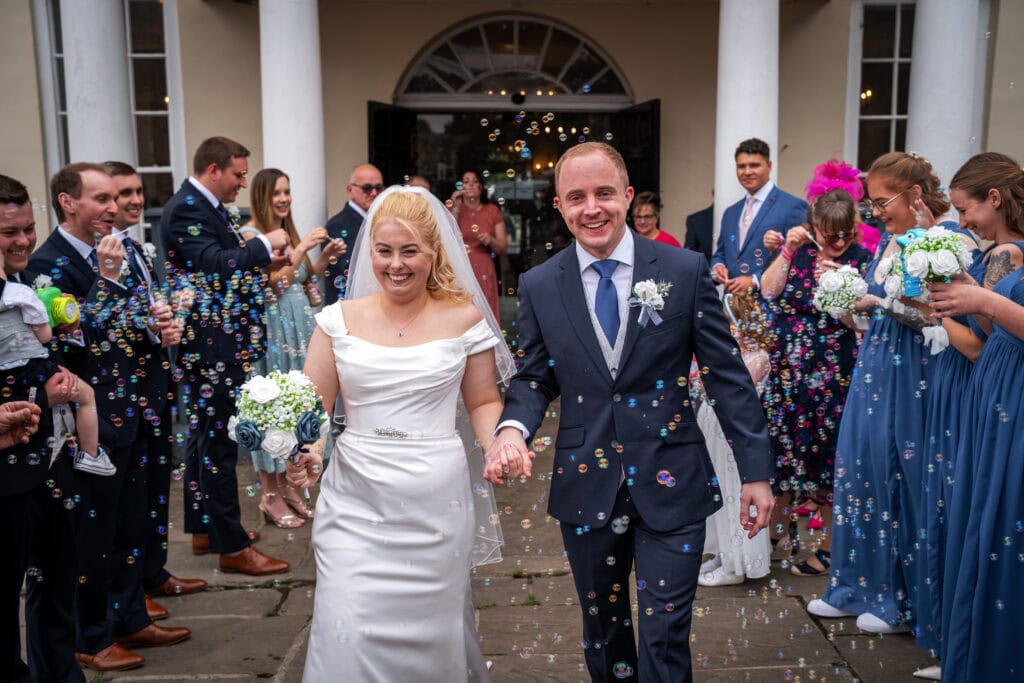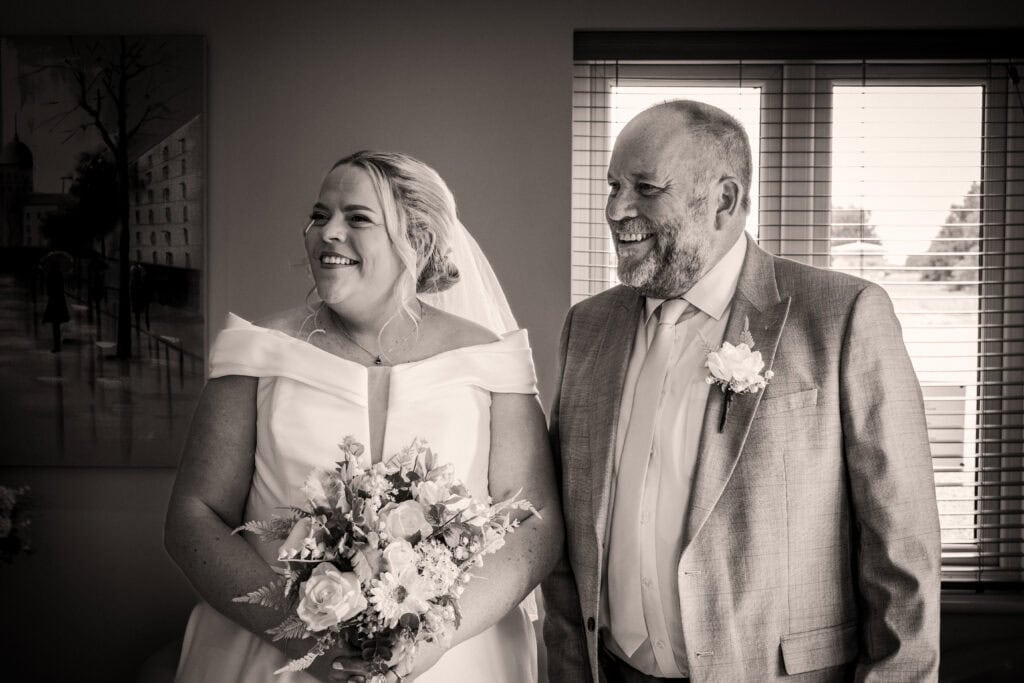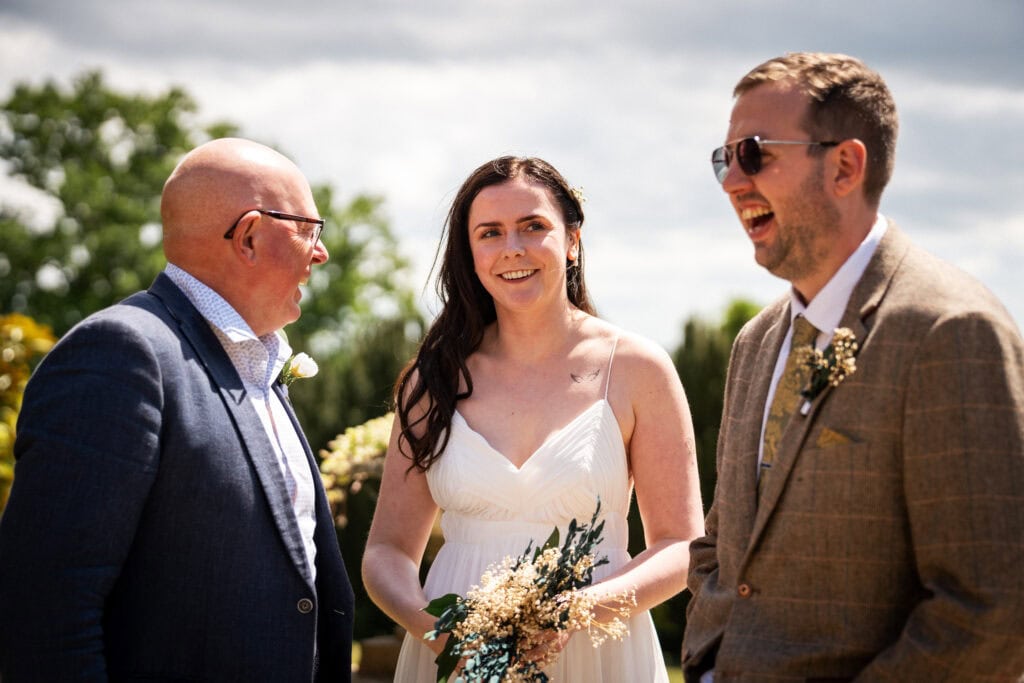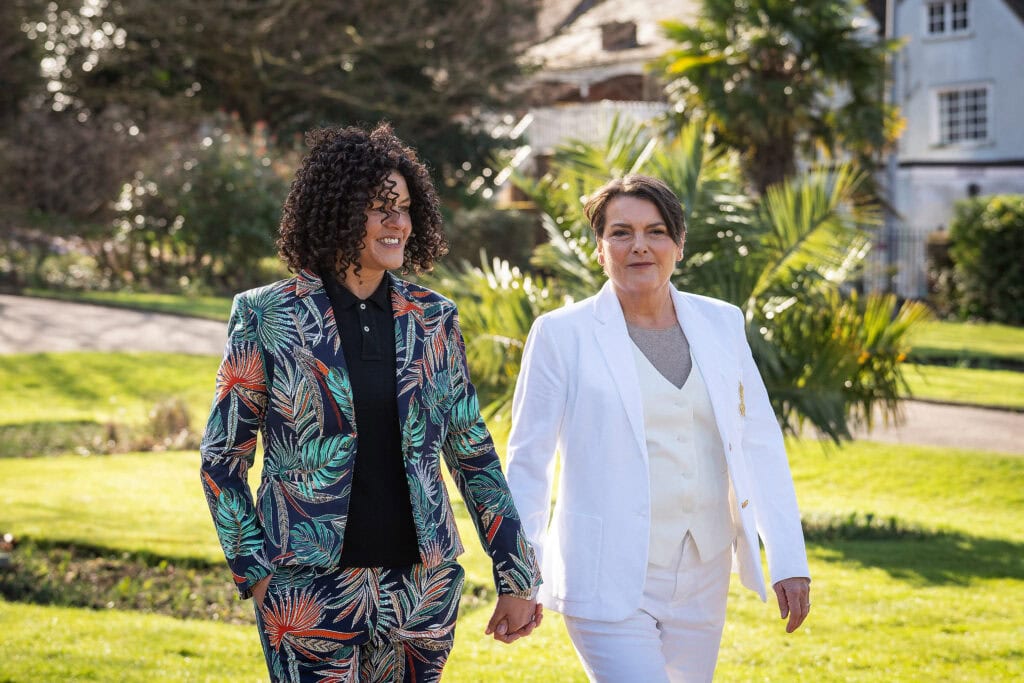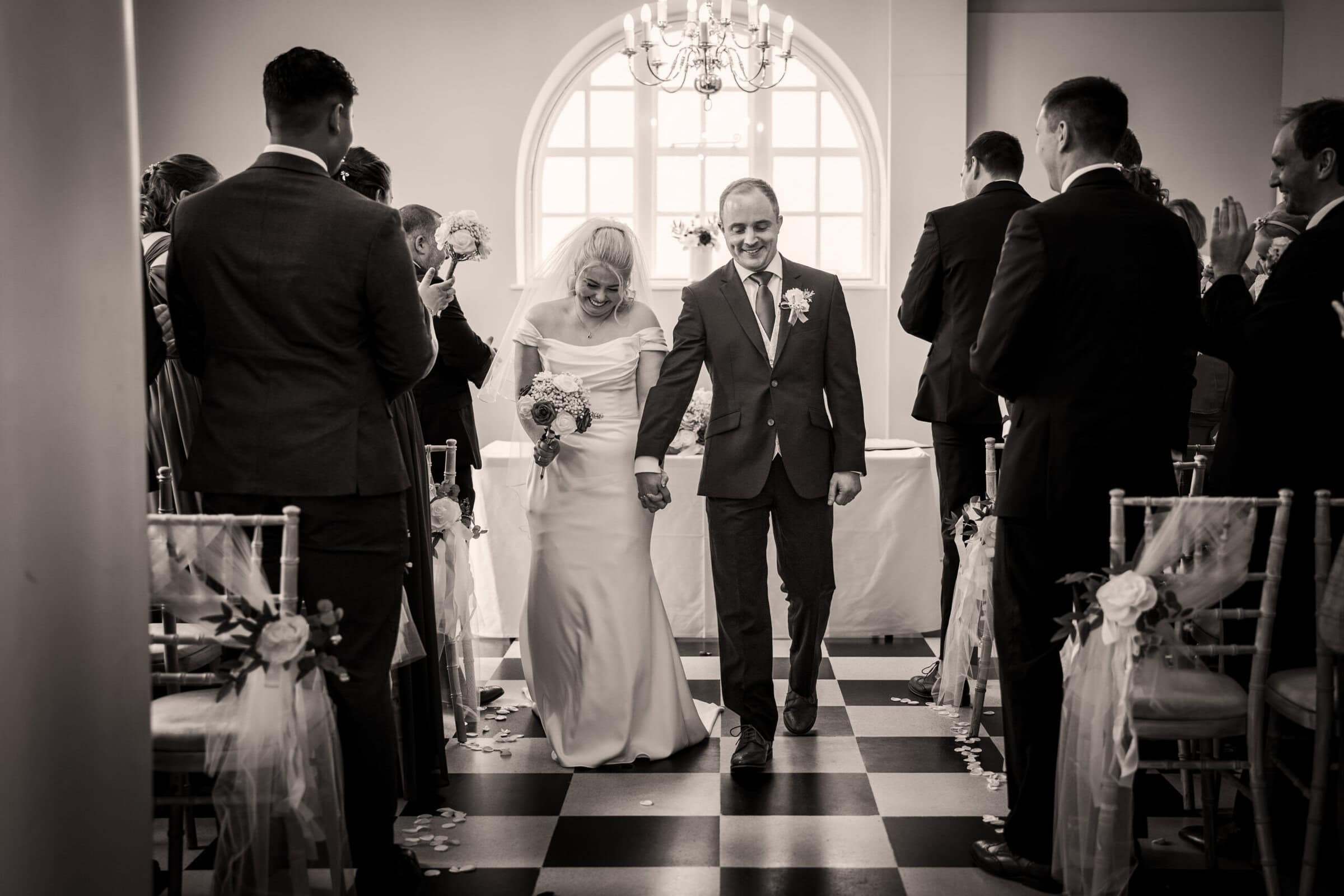
Choosing a calm low stress wedding photographer in Essex is less about finding someone who promises to be relaxed and more about choosing someone with a clear plan for protecting your time, comfort, and attention. Your wedding photographs should preserve the hugs, laughter, quiet glances, and busy dance floor without making the day feel like one long photo session.
TL;DR: A low stress photography experience is built through planning, not vague promises. Ask about the portrait time budget, family group process, rain plan, photographer footprint, accessibility preferences, backup arrangements, and how often you will be interrupted. Natural coverage works best when the photographer knows when to quietly observe and when to offer brief, useful direction.
What a Calm Photography Approach Really Looks Like
It protects the flow of the day
A calm approach does not mean a photographer disappears completely. Weddings still need some coordination. Family photographs require people to be gathered, couple portraits benefit from good light and a private moment, and the schedule may shift when a ceremony runs late.
The difference is how that coordination happens. A low stress photographer should work around meaningful parts of the day rather than repeatedly pulling you away from them. Instead of stopping you every few minutes for another image, they should identify a small number of planned moments where direction is genuinely useful.
Think of your photography as having an interruption budget. This is not a formal industry standard, but it is a helpful planning tool. Decide in advance when you are happy to be guided and when you would rather remain fully present. For example:
• Ten minutes after the ceremony for family photographs
• Fifteen to twenty minutes for couple portraits
• A short sunset walk if the light and schedule allow it
• Brief coordination before speeches or cake cutting if needed
Everything else can be largely observational. That structure prevents photographs from taking over the welcome drinks, meal, or time with guests.
It combines documentary coverage with helpful direction
Documentary or reportage wedding photography focuses on real interactions as they happen. It is well suited to couples who do not want to perform for the camera, but it does not have to mean receiving no help at all.
An Essex photographer may quietly document a parent fastening a buttonhole, friends laughing before the ceremony, or a grandparent watching the first dance. At other points, a little direction can make the experience easier. A photographer might suggest standing near a window, turning slightly toward each other, or walking slowly together rather than asking you to hold an uncomfortable pose.
| Coverage style | How it usually feels | Best for | Potential drawback |
|---|---|---|---|
| Documentary | Mostly observational, with minimal interruption | Couples who want events to unfold naturally | Group organization may need more planning |
| Lightly directed | Gentle prompts during portraits and key moments | Camera shy couples who still want guidance | Requires clear limits on portrait time |
| Traditional posed | More structured and formal throughout the day | Couples who want many formal images | Can take more time away from guests |
It starts with communication before the wedding
The calmest wedding day often begins weeks before the wedding itself. A useful consultation should cover your priorities, the people you most want photographed, the moments you would prefer left uninterrupted, and any worries about being photographed.
We recommend being specific rather than simply saying you are “not comfortable in front of the camera.” Explain what would help. You might prefer no touching when being positioned, a warning before flash is used, a quiet place for portraits, shorter sessions, or a clear verbal prompt instead of vague instructions.
A good conversation also gives you a chance to test communication. Are answers clear? Does the photographer ask practical questions? Are your preferences repeated back accurately? Those small signs matter because wedding day calm is often the result of decisions made well before guests arrive.
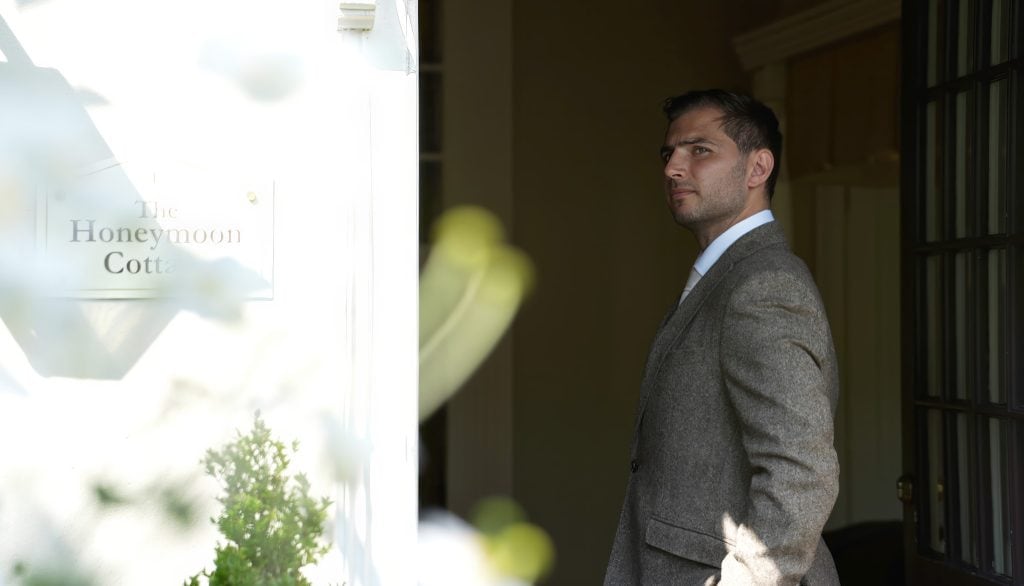
A man in a suit stands outside a building with a sign reading “The Honeymoon Cottage.
Build a Timeline That Keeps Photography in Its Place
Give each photo task a realistic time budget
A wedding timeline does not need to be rigid, but it should show where photographs fit. Without clear time boundaries, group photographs often expand, couple portraits become rushed, and sunset plans can interrupt dinner or dancing.
For a typical wedding, a gentle structure may look like this:
| Moment | Suggested approach | Why it reduces pressure |
|---|---|---|
| Preparation | Documentary coverage with a few detail photographs | Captures atmosphere without constant direction |
| Ceremony | Quiet observation from agreed positions | Keeps attention on the vows |
| Family groups | Pre planned list, ideally 10 to 20 minutes | Prevents guests being gathered repeatedly |
| Couple portraits | One focused session of around 15 to 25 minutes | Gives you quality time without missing the reception |
| Evening light | Optional 5 to 10 minute walk | Adds variety without forcing a long second shoot |
These are planning ranges, not universal rules. A large family, multiple cultural traditions, or a venue with long walking distances may require more time. The key is making the tradeoff visible before the day.
For a fuller planning framework, see the ultimate timeline for your Essex wedding photography. A timeline is not about making the day feel controlled. It is about removing last minute decisions when everyone is already busy.
Keep group photographs short and intentional
Family formal photographs are often the point where couples lose the most reception time. The solution is not necessarily skipping them. For many families, these photographs matter deeply. The solution is reducing the number of combinations and making responsibility clear.
Create a list that includes names, not only relationships. “Bride with parents” is less useful than listing each person. Choose one confident helper from each side of the family who can gather people quickly. Tell them where the photographs will happen and when they should be ready.
A sensible list might include immediate family, grandparents if present, siblings, and one or two groups of close friends. If there are twenty requested combinations, consider whether some can be taken candidly later or whether the schedule needs a longer formal-photo window.
Plan for Essex weather and venue constraints
Essex weddings can involve bright gardens, coastal wind, historic interiors, barn venues, dark ceremony rooms, and wet ground after a sudden shower. A relaxed photographer should have a rain contingency that is discussed before the wedding, not improvised during it.
Ask where portraits would take place if the lawn is unusable. Check whether there is a covered walkway, sheltered doorway, bright staircase, conservatory, or indoor room with enough space. If the fallback space is narrow, ask whether group photographs will need to happen in smaller sets.
Fair warning: a silent electronic shutter is not always the whole answer for a quiet ceremony. Some camera modes can behave differently under certain artificial lighting, and discreet photographers may still need mechanical shutter use, flash later in the day, or backup equipment. Ask exactly how many people, cameras, bags, lights, and stands may be in the room.
Portraits, Candids, and Time With Your Guests
Make portraits feel like a pause, not a performance
You do not need to enjoy posing to have beautiful couple photographs. The most comfortable portrait sessions tend to use simple movement and clear prompts rather than asking you to hold a fixed expression.
A photographer can suggest walking toward a quieter part of the venue, standing close together, looking at each other for a moment, or taking a slow breath before the next photograph. These are small actions, but they give your hands and attention somewhere natural to go.
Set a portrait time budget during planning. For many couples, fifteen to twenty five minutes after the ceremony is enough for a varied set of images if the locations are nearby. Choose a longer session only when portrait photography is a major priority, the venue is expansive, or travel between locations is necessary.
Avoid a lengthy portrait session if you value joining the drinks reception, if guests have travelled far, or if you are likely to feel drained after the ceremony. In that case, use one short session and an optional five minute evening revisit instead.
Let candid coverage preserve the atmosphere
Candid coverage helps you stay present because it does not require you to repeatedly step out of the room. While you talk to friends, greet relatives, or sit down for dinner, the photographer can document the reactions around you.
Those photographs often become valuable because they show parts of the day you could not fully see: a friend wiping away a tear during the ceremony, children playing near the tables, guests reacting to a speech, or two family members sharing a quiet conversation.
This is not a guarantee that every moment will be captured. No photographer can be in every place at once. That is why priorities and coverage matter. A second photographer can broaden the story by covering separate locations or simultaneous reactions, but it also increases the working footprint. Decide whether the added coverage feels useful for your guest count, venue layout, and schedule.
Jennings Photography describes relaxed documentary coverage and flexible options for smaller celebrations across Essex and Suffolk. Flexible coverage can be especially useful when a short registry office ceremony or intimate gathering does not need a full day of photography.
Use a private portrait alternative when needed
Not every couple wants portraits in front of guests. If that sounds uncomfortable, ask for a private alternative. This could mean stepping into a garden, quiet courtyard, empty ceremony room, or nearby lane for ten minutes while guests begin drinks.
Privacy can be helpful for camera shy couples, people who become overwhelmed in crowds, or anyone who simply wants a few calm minutes together. It may also help if the day has a demanding family dynamic and you need space to reset.
Be direct about consent and accessibility needs. You can request:
• Verbal direction before any adjustment to clothing or position
• No physical touching without permission
• Short breaks between group photographs
• A lower sensory setup where possible
• Pronouns and family relationships recorded correctly in the shot list
• A plan for mobility needs, seating, stairs, or uneven ground
These requests are not difficult extras. They are useful details that help photography fit the people being photographed.
How to Compare Essex Photographers With Confidence
Ask questions that reveal the working method
Two photographers can both describe themselves as relaxed while offering very different experiences. One may spend most of the day observing. Another may use frequent creative direction. Neither is automatically wrong, but you deserve to know which approach is being offered.
Use the conversation to ask for specifics. “How do you keep things relaxed?” is a good opening question, but it should lead to practical answers about timings, family groups, communication, and contingency planning.
| Question to ask | A reassuring answer should explain | Watch for |
|---|---|---|
| How long do couple portraits usually take? | A range and how it changes with venue or weather | No time estimate at all |
| How are family groups organized? | A list, helper, location, and expected duration | Promises to “sort it out” on the day |
| What happens if it rains? | Specific indoor or covered alternatives | A vague promise that weather will not matter |
| What is your photographer footprint? | Number of people, lighting approach, and movement during the ceremony | No clarity on additional equipment or team members |
| How do you support camera shy couples? | Simple prompts, consent, breaks, and planning | Pressure to “just relax” |
For more selection questions, top tips for choosing your perfect Essex wedding photographer can help you compare the practical details behind a photographer’s style.
Check the contract, not only the portfolio
A beautiful portfolio shows aesthetic style. A contract shows how problems may be handled. Both matter.
There is no single standardized contract for calm wedding photography, so do not assume important protections are included. Read the terms and ask questions about illness, replacement coverage, image backup, delivery expectations, overtime, travel, meals, cancellation, and rescheduling.
If the photographer becomes unavailable, ask whether they will arrange a replacement, whether you can approve that replacement, and what happens if a suitable replacement cannot be found. For image safety, ask whether files are backed up during or immediately after the wedding and how long images are retained after delivery.
Clarify the coverage window too. A shorter package can feel wonderfully focused when your ceremony and reception are close together. It can feel stressful if it ends just before speeches or first dance. Stephen Minett Photography’s retrieved page displays shorter coverage from £499 and full day coverage at £1,299, subject to confirmation of current pricing and availability. The useful takeaway is that lower stress is not automatically tied to a longer or more expensive package. It depends on whether the contracted hours match the moments you care about.
Judge comfort before you book
A meeting, call, or engagement session can help you decide whether communication feels easy. Notice whether the photographer listens without dismissing your concerns, explains choices in plain language, and provides enough structure without becoming controlling.
You do not need to be endlessly cheerful or naturally confident in photographs. A good fit is someone who can work with your actual comfort level. If you leave the conversation feeling pressured to change your preferences, it may not be the right match.
Frequently Asked Questions About Calm Essex Wedding Photography
Can we have natural wedding photos if we feel awkward in front of the camera?
Yes. Natural photographs do not require you to be naturally performative. Ask for simple prompts, a short portrait session, and clear direction about where to stand or what to do with your hands. You can also prioritize candid coverage and reserve posed images for a small number of family groups.
How long should couple portraits take if we want minimal disruption?
A useful starting point is around fifteen to twenty five minutes, with an optional short evening session if the light is good. This depends on venue size, walking distance, weather, and how many locations you want. If staying with guests is your top priority, keep portraits near the reception area and avoid traveling elsewhere.
Will a documentary photographer still help us pose when needed?
Usually, yes, but confirm it. Documentary photography describes the overall approach, not necessarily a refusal to direct. Ask how the photographer handles family groups and couple portraits, and whether they provide prompts rather than fixed poses.
How can we avoid spending most of the day on group photographs?
Keep the formal list focused, write down names, appoint family helpers, and choose one location close to the ceremony or drinks reception. Tell important relatives in advance when they need to be available. If there are many combinations, decide which groups matter most rather than adding every possible variation.
What should we ask about rain and indoor backup plans?
Ask where portraits, groups, and guest photographs would happen in wet weather. Check the space in person if possible. A good backup plan names actual locations and explains whether the photographer will use natural light, flash, or a combination of both.
Do we need two photographers for a relaxed wedding?
Not always. One photographer may be ideal for a small ceremony, intimate guest list, or simple venue layout. Two photographers may help when preparations happen in different places, the venue is large, or you want separate reactions photographed during the ceremony and speeches. Ask how an additional photographer will affect the room, not only the number of images delivered.
If you are planning an Essex wedding and want photography that gives you room to enjoy your guests, start an enquiry with your priorities rather than a generic request for a quote. Share your venue, timings, guest count, portrait comfort level, family-photo needs, and any accessibility preferences. That first conversation can show whether the approach feels as calm as the photographs look.